
 Pin it
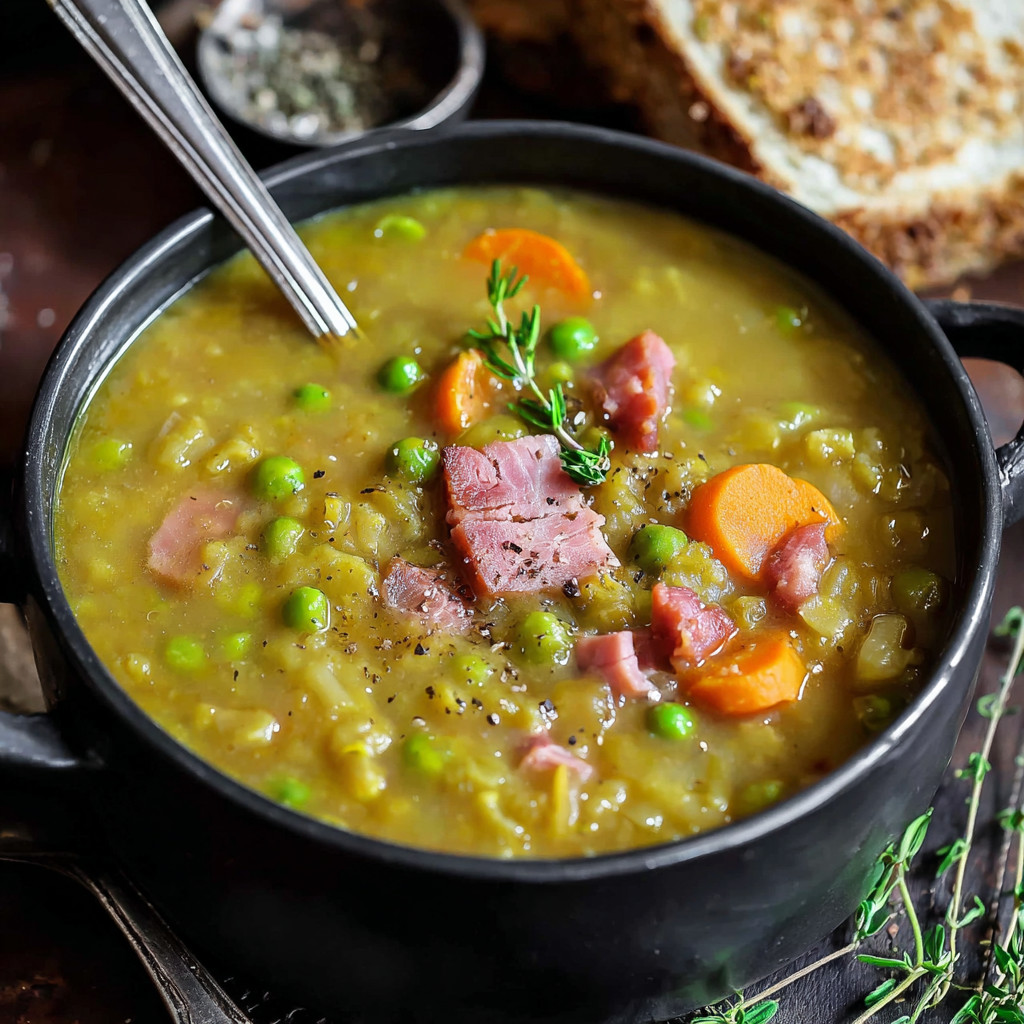
This old-fashioned pea soup combines slow-cooked split peas with a ham bone and fresh vegetables to create a deeply flavorful and hearty meal. The longer it simmers, the thicker and more comforting it becomes, making it perfect for chilly days or when you want something nourishing and simple.
I first made this recipe following an old family tradition, and now it’s my go-to whenever I need a warm, hearty dish that brings everyone to the table.
Ingredients
- One large ham bone with meat attached: this is the flavor powerhouse, so choose one with plenty of meat
- One pound bag of dried split green peas: look for bright green peas free of debris for the best taste
- One large onion chopped: gives sweetness and depth
- One cup finely chopped celery: adds freshness and crunch
- One cup diced carrots: balances the flavors with natural sweetness
- Half teaspoon of black pepper: for subtle heat
- One dry bay leaf: imparts a gentle herbal note
- One teaspoon salt: adjusts and enhances the overall taste
- About half a teaspoon dried thyme: offers earthiness and complexity
- Note: Choosing fresh veggies and a meaty ham bone will give your soup the best texture and flavor.
Step-by-Step Instructions
- Sift and soak the peas:
- Pick through the dried peas carefully to discard anything other than peas. Rinse them under cool water until clear. Place them in a large Dutch oven and add enough water to cover them by about two inches. Bring this to a boil for two minutes, then remove from heat and cover the pot. Let the peas soak for between one and four hours until they soften. Once ready, drain and rinse the peas, discarding the soaking water.
- Combine and boil ingredients:
- Put the softened peas back in the Dutch oven and pour in 2 and a half quarts of fresh water. Add the ham bone, chopped onion, a dash of salt, pepper, thyme, and the bay leaf. Bring everything to a boil together.
- Simmer gently:
- Reduce the heat to low, cover the pot, and let the soup simmer very gently for about ninety minutes. Stir occasionally to prevent sticking and to keep the flavors marrying well.
- Remove ham and shred meat:
- Take out the ham bone, let it cool enough to handle, then pull the meat off the bone. Discard the bone and chop the meat into bite-sized pieces. Return the ham cubes back to the soup.
- Cook vegetables and thicken:
- Add the celery and carrots to the soup and leave the lid off so some liquid evaporates. Let it simmer for another 45 to 60 minutes until the vegetables are tender and the soup reaches your desired thickness. Before serving, remove and discard the bay leaf.
 Pin it
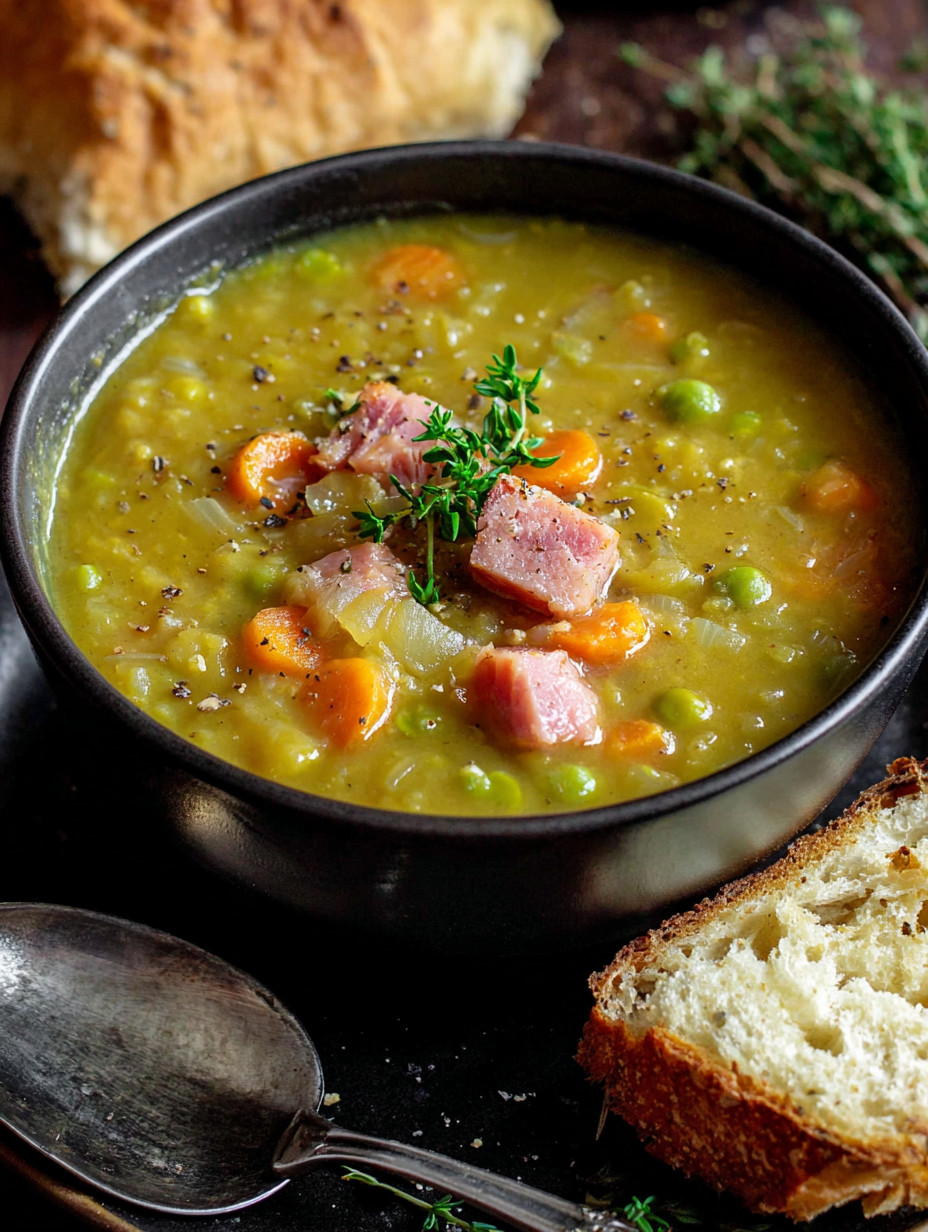
My favorite part is the ham bone itself which infuses the soup slowly with smoky, meaty goodness. I remember my grandma patiently simmering this each weekend and how that aroma always made the kitchen feel like home.
Storage Tips
This pea soup stores well in the refrigerator for up to four days. Since it thickens considerably as it cools, I usually add a splash of water or broth when reheating to loosen it up. For longer storage, it freezes nicely in airtight containers for up to three months without losing its rich flavor.
Ingredient Substitutions
If you don’t have a ham bone, ham hocks work as a good alternative though the soup might be a little less rich. You could also use diced ham but expect a subtler depth. For a vegetarian version, omit the ham and replace the water with vegetable broth and add smoked paprika for that smoky note.
 Pin it
Serving Suggestions
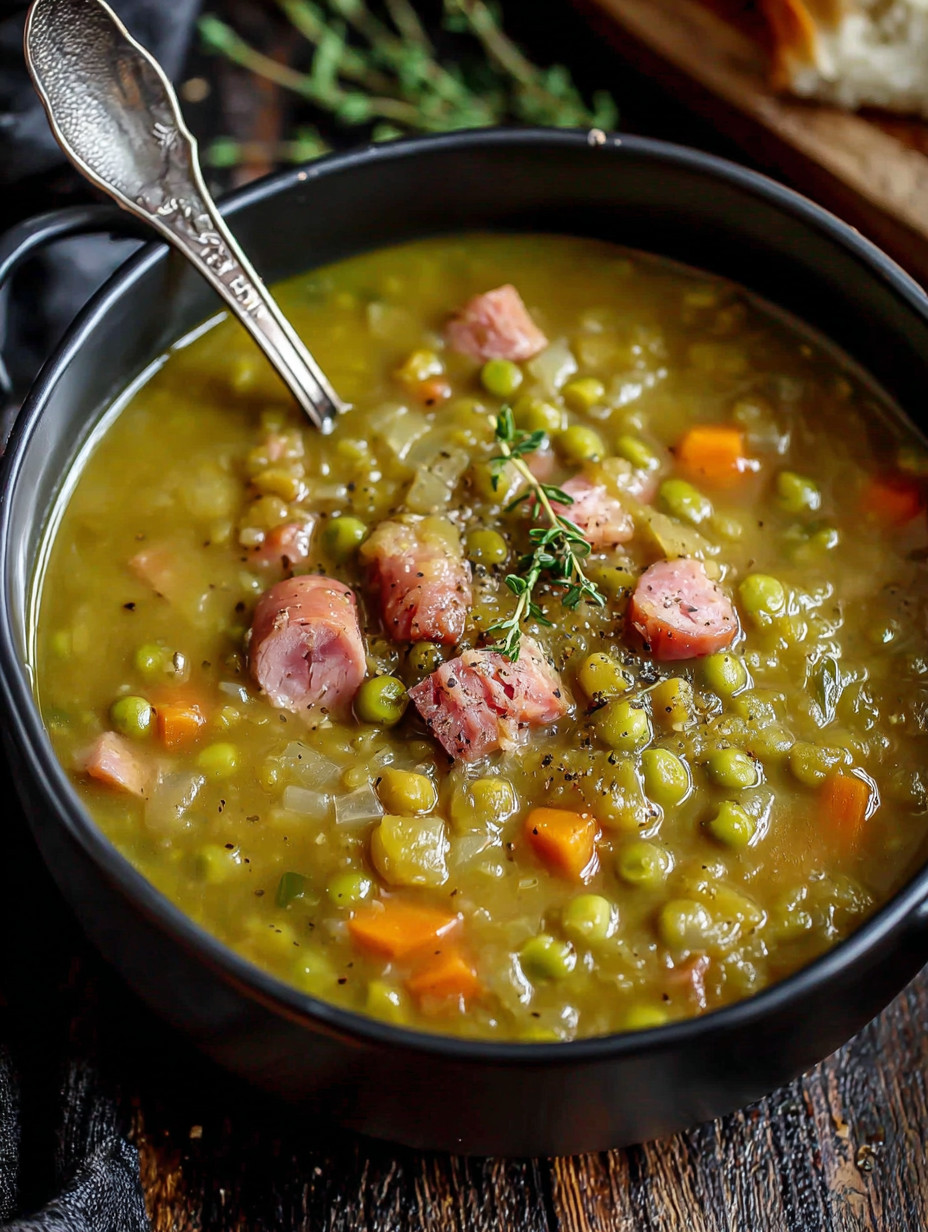
This soup is delicious on its own with a crusty slice of bread for dipping. You can also garnish it with fresh herbs like parsley or thinly sliced green onions. A dollop of sour cream or Greek yogurt makes a nice creamy contrast. Pair it with a light salad to balance out the meal.
Frequently Asked Questions
- → Can I substitute the ham bone with something else?
Yes, ham hocks or diced ham can be used as alternatives, though the flavor may be slightly lighter.
- → How do I prevent the soup from sticking to the pot?
Stir the soup occasionally during simmering to avoid sticking or burning on the bottom.
- → Why soak the split peas before cooking?
Soaking softens the peas, reducing cooking time and improving texture.
- → What can I do if the soup gets too thick after cooling?
Add a bit of water while reheating to loosen the consistency.
- → Is it important to remove the bay leaf before serving?
Yes, removing the bay leaf ensures the flavor isn’t overpowering and avoids an unpleasant texture.
- → Can this be prepared ahead of time?
Allowing the soup to rest overnight helps flavors develop even more richness.