
 Pin it
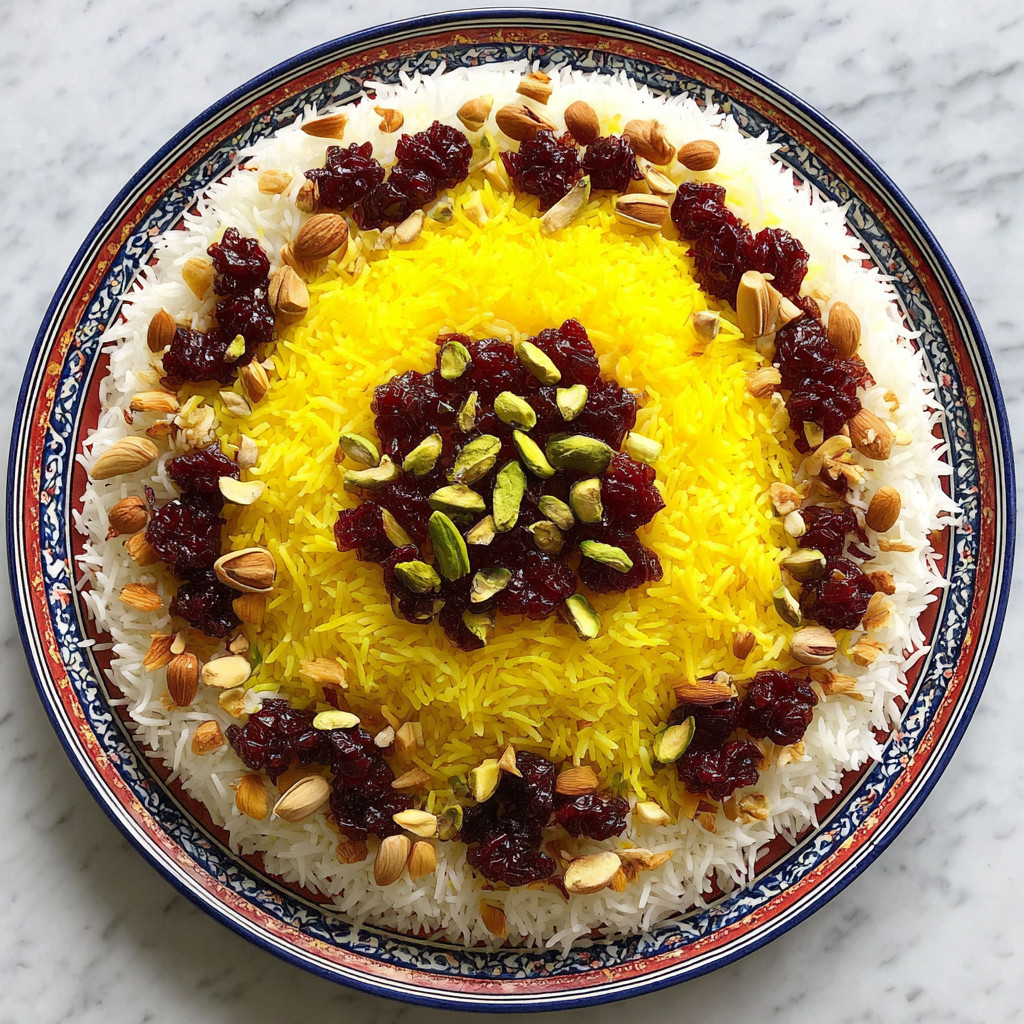
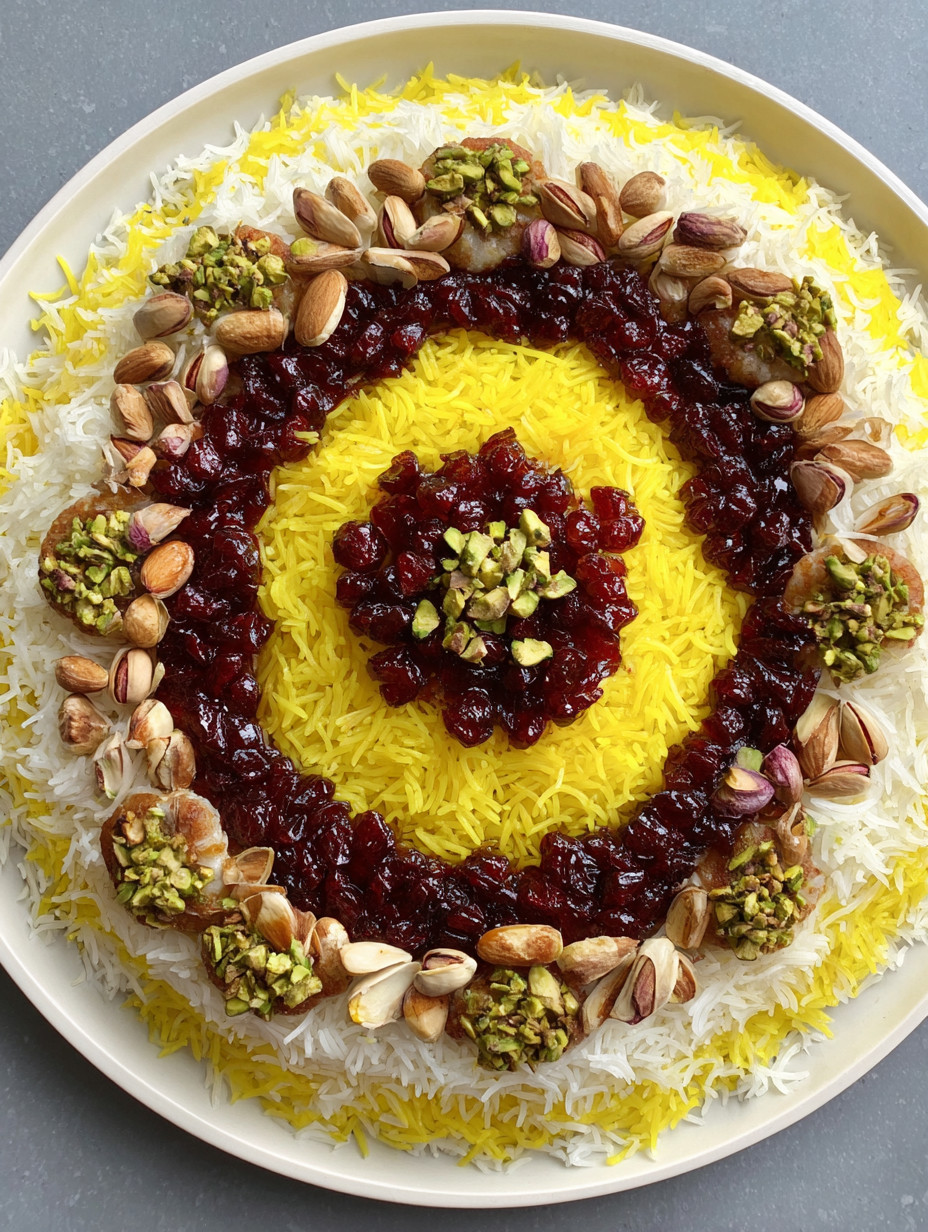
Zereshk Polo is a beautiful Persian dish that brings delicate basmati rice together with the tart brightness of barberries and the luxurious scent of saffron. The saffron tahdig, a golden crispy rice crust, adds both texture and a stunning centerpiece to the dish. Whether paired with rich Persian stews like saffron chicken or chickpea, this recipe truly embodies the essence of Persian home cooking and festive celebrations.
I made my first batch of Zereshk Polo for a dinner party, and my guests couldn’t stop talking about the crispy tahdig. It has since become a dish I cook when I want to impress without stress.
Ingredients
- Two cups of white basmati rice: This rice variety is prized for its fragrant aroma and long, slender grains that stay fluffy and separate after cooking
- Half a teaspoon of ground saffron or a pinch of whole saffron threads: Saffron delivers a delicate floral fragrance and warm golden color choose high-quality saffron for the best flavor
- Six to eight cups of water: Ample water is necessary for parboiling the rice perfectly
- Two teaspoons of salt: Key to seasoning the rice evenly from the inside out
- Two to three tablespoons of extra virgin olive oil: Provides richness and helps form the tahdig crust
- Three quarters of a cup of dried barberries: These tart berries are the star topping, offering a bright pop of flavor and beautiful color rinse well before use
- One and a half ounces of white sugar: Balances the tartness of the barberries with sweetness
- Slivered pistachios and almonds: Garnishes that add crunch and a mild nutty flavor
- A drizzle of saffron water: Made by steeping saffron threads in hot water to concentrate the flavor
Step-by-Step Instructions
- Wash the Rice:
- Gently rinse the basmati rice in a non-stick pot under cold running water about four to five times until the water runs clear. This removes excess starch and helps keep the rice from becoming sticky.
- Parboil the Rice:
- Fill the pot with six to eight cups of water and add two teaspoons of salt. Heat over medium-high until it simmers. Cook the rice for about 10 to 12 minutes until it is just tender but still al dente. Skim off any foam that forms on top to keep the rice clean and bright.
- Prepare Saffron Water:
- While the rice cooks, grind saffron threads into a fine powder. Add about half a teaspoon to a small jar and pour a few tablespoons of boiling water over it. Let it infuse for at least 10 minutes to release its aroma and color.
- Drain and Rinse Rice:
- Drain the parboiled rice through a fine mesh sieve. Rinse gently under cold running water, using low pressure to avoid breaking the grains but washing off any remaining starch.
- Prepare the Saffron Tahdig Layer:
- Scoop a few ladles of the parboiled rice into a bowl and mix in a drizzle of the saffron water, stirring until the rice absorbs the color and becomes vibrantly yellow.
- Form the Tahdig:
- Drizzle two tablespoons of olive oil into the bottom of the clean non-stick pot. Spread the saffron-infused rice evenly on the bottom to create the tahdig base.
- Add Remaining Rice:
- Add the rest of the parboiled rice on top of the tahdig layer. Using the handle of a wooden spoon, gently poke holes through the rice to the bottom of the pot. This helps steam circulate evenly and cooks the rice thoroughly.
- Steam the Rice:
- Wrap the lid of the pot with a clean kitchen towel and cover the pot tightly. Add a small splash of water inside the pot to create steam, then cook on the lowest heat setting for 45 minutes. This slow steaming crisps the tahdig and finishes the rice cooking perfectly.
- Prepare Barberries:
- Rinse the dried barberries carefully to remove any grit. In a small pan, heat one tablespoon of olive oil, add the barberries, sugar, and a little saffron water. Simmer gently for three to five minutes while stirring constantly to soften the berries and dissolve the sugar, adding tiny amounts of water if the mixture looks too dry.
- Flip and Serve:
- Remove the lid and place a large serving dish upside down over the pot. Carefully flip the pot and dish together so the rice and tahdig release onto the plate. Lift the pot away to reveal the prized golden and crispy tahdig layer.
- Garnish:
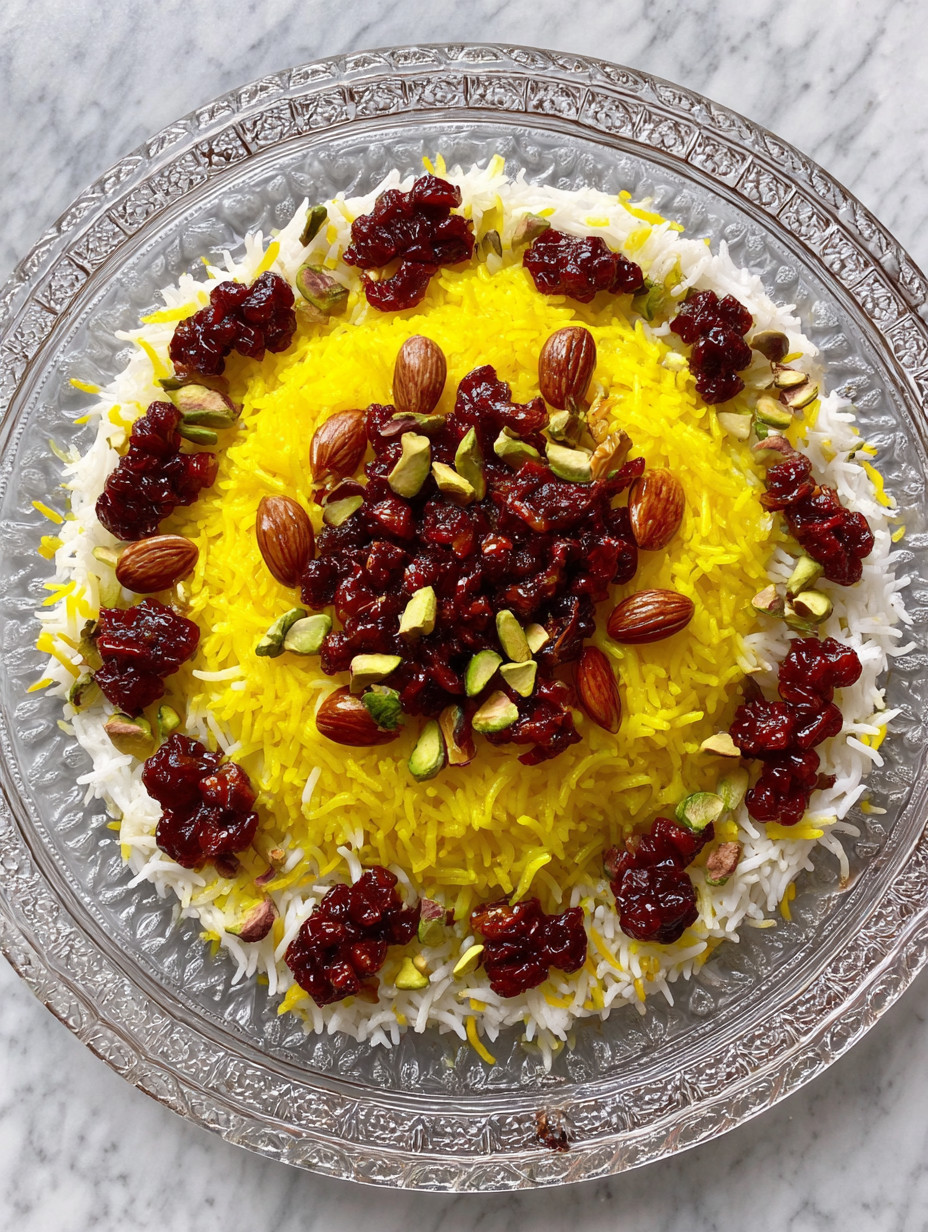
- Sprinkle the softened barberries over the top of the rice. Finish with a generous scattering of slivered pistachios and almonds for crunch and color contrast.
- Serve:
- Serve Zereshk Polo warm alongside traditional Persian stews such as saffron chicken or chickpea stew. A fresh Shirazi salad is an ideal companion to balance the rich flavors.
 Pin it
My favorite ingredient is the barberries whose bright tartness contrasts beautifully with the rich saffron rice. I remember my first Persian friend making this for me and how the golden tahdig was the star. It was clear why it’s considered a treat and centerpiece in Persian households.
Storage Tips
Leftover Zereshk Polo stores well in the refrigerator for up to three days. Reheat gently in the microwave or on the stovetop with a bit of water to refresh the rice grains and soften the tahdig without turning it soggy.
Ingredient Substitutions
If you cannot find barberries, dried cranberries or sour cherries can offer some tartness, although they will change the traditional flavor. Saffron is irreplaceable for color and aroma but you can use turmeric thrown in small amounts for some color without the unique taste.
Serving Suggestions
Zereshk Polo is excellent served with Persian chicken stew, chickpea and eggplant stew, or simply a fresh Persian cucumber and tomato salad. It also pairs well with grilled meats or roasted vegetables for a modern twist.
Cultural Context
 Pin it
Zereshk Polo is a celebratory Persian dish often served at weddings and holidays. The emphasis on the saffron tahdig and barberries illustrates the Persian love for balance between flavors and textures, blending sweet, tart, and crispy in a single dish that is both rustic and elegant.
Frequently Asked Questions
- → What is tahdig in Zereshk Polo?
Tahdig is the golden, crispy crust formed at the bottom layer of the rice pot. It’s achieved by slow cooking saffron-infused rice with olive oil, creating a flavorful crunchy texture.
- → How do you infuse the rice with saffron?
Saffron threads are ground and soaked in boiling water to release their color and aroma. This saffron water is gently mixed with a portion of the rice to impart vibrant color and fragrant notes.
- → Why are barberries used in this dish?
Barberries add a tart and slightly sweet flavor that contrasts with the rich, buttery saffron rice, giving the dish its distinctive bright taste and appealing texture.
- → What tips improve the texture of basmati rice?
Rinsing rice several times removes excess starch for fluffiness. Parboiling the rice until just al dente and rinsing again prevents clumping and preserves individual grains during steam cooking.
- → Can the nuts be omitted or substituted?
Slivered pistachios and almonds add crunch and flavor but can be omitted or swapped with walnuts or cashews according to preference or availability.
- → How to ensure the tahdig crisps without burning?
Cooking over the lowest heat setting and wrapping the lid with a kitchen towel to absorb steam helps the tahdig crisp evenly without burning.