
 Pin it
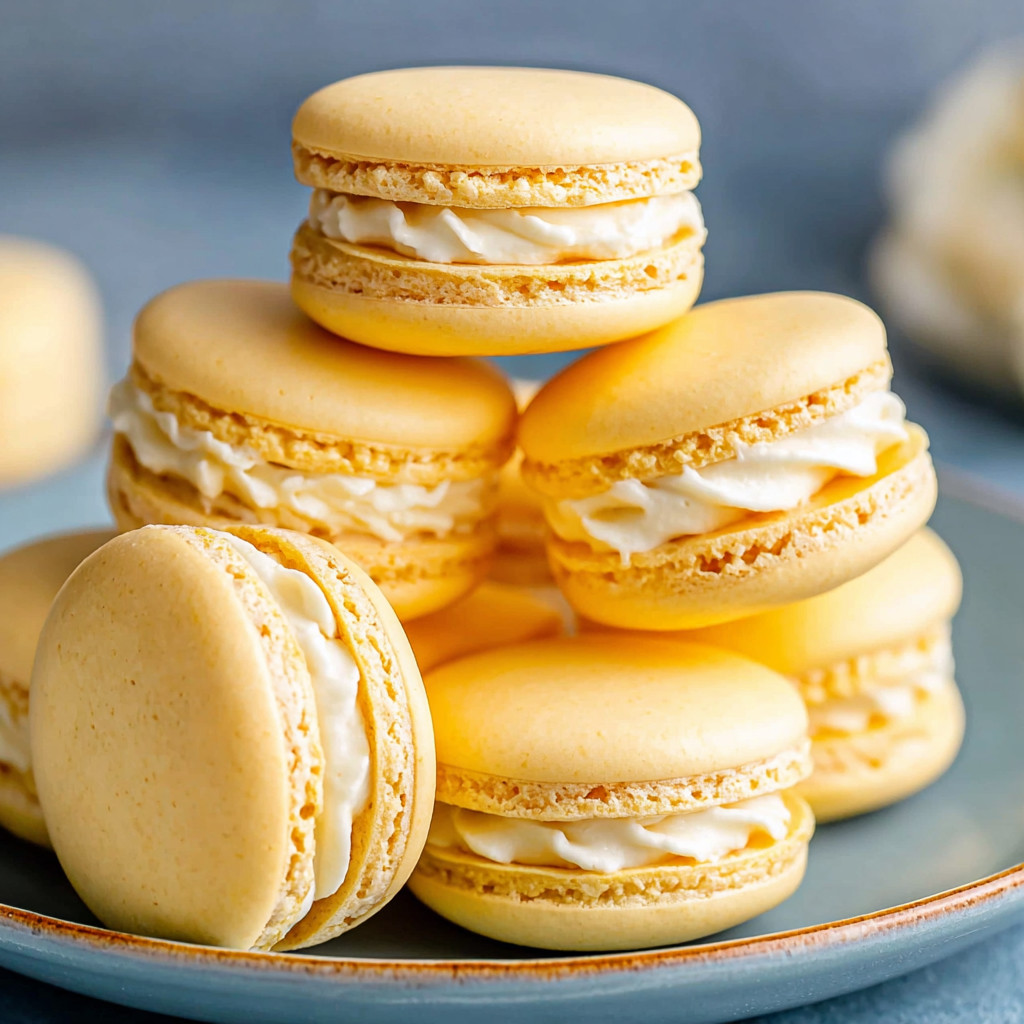
Swiss meringue macarons are a wonderful way to create elegant, colorful treats that are sure to impress at any gathering. These delicate confections have a crisp shell with a chewy interior, perfectly balanced by smooth, buttery filling. Making macarons might seem intimidating, but this recipe breaks down the steps to give you beautiful results every time.
Ingredients
- Egg whites: at room temperature essential for whipping to the right stiffness and volume
- Granulated sugar: gradually incorporated to stabilize the meringue and give it that glossy shine
- Powdered sugar: helps create the smooth texture of the shell
- Almond flour: finely ground for a delicate crumb and natural nutty flavor, choose blanched almond flour for best color and smoothness
- Gel food coloring: optional but vibrant and concentrated, avoid liquid colorings to keep batter consistency perfect
- Butter or cream cheese for the filling: both create a rich, creamy contrast to the crisp shells, use unsalted butter softened at room temperature for easy mixing
Step-by-Step Instructions
- Preheat the oven and prepare your baking sheets:
- Set your oven to 300 degrees Fahrenheit or 150 degrees Celsius and line your baking sheets with parchment paper to ensure your macarons don’t stick and have a smooth bottom.
- Whip the egg whites to create a stable meringue:
- In a very clean bowl, start whipping the room temperature egg whites until foamy. Slowly add the granulated sugar while continuing to whip until you reach stiff peaks that hold their shape but are not dry or grainy.
- Sift the dry ingredients for a fine texture:
- Sift the almond flour and powdered sugar together to avoid lumps and ensure your batter is smooth and shiny.
- Fold the dry ingredients into the meringue carefully:
- Gently fold the almond flour mixture into the meringue using a spatula in batches. The goal is to deflate the meringue slightly until the batter flows slowly off the spatula in ribbons without being runny.
- Pipe the batter and let it rest before baking:
- Transfer the batter to a piping bag and pipe small rounds about 1 inch in diameter onto the parchment-lined baking sheets. Leave space between each. Let the shells rest at room temperature for 30 minutes so a skin forms on top to help develop the characteristic macaron feet when baked.
- Bake until set and easy to lift:
- Place the sheets in the oven and bake for 15 to 20 minutes. The macarons are ready when they easily lift from the parchment without sticking and have a firm shell with a slight chew inside.
 Pin it
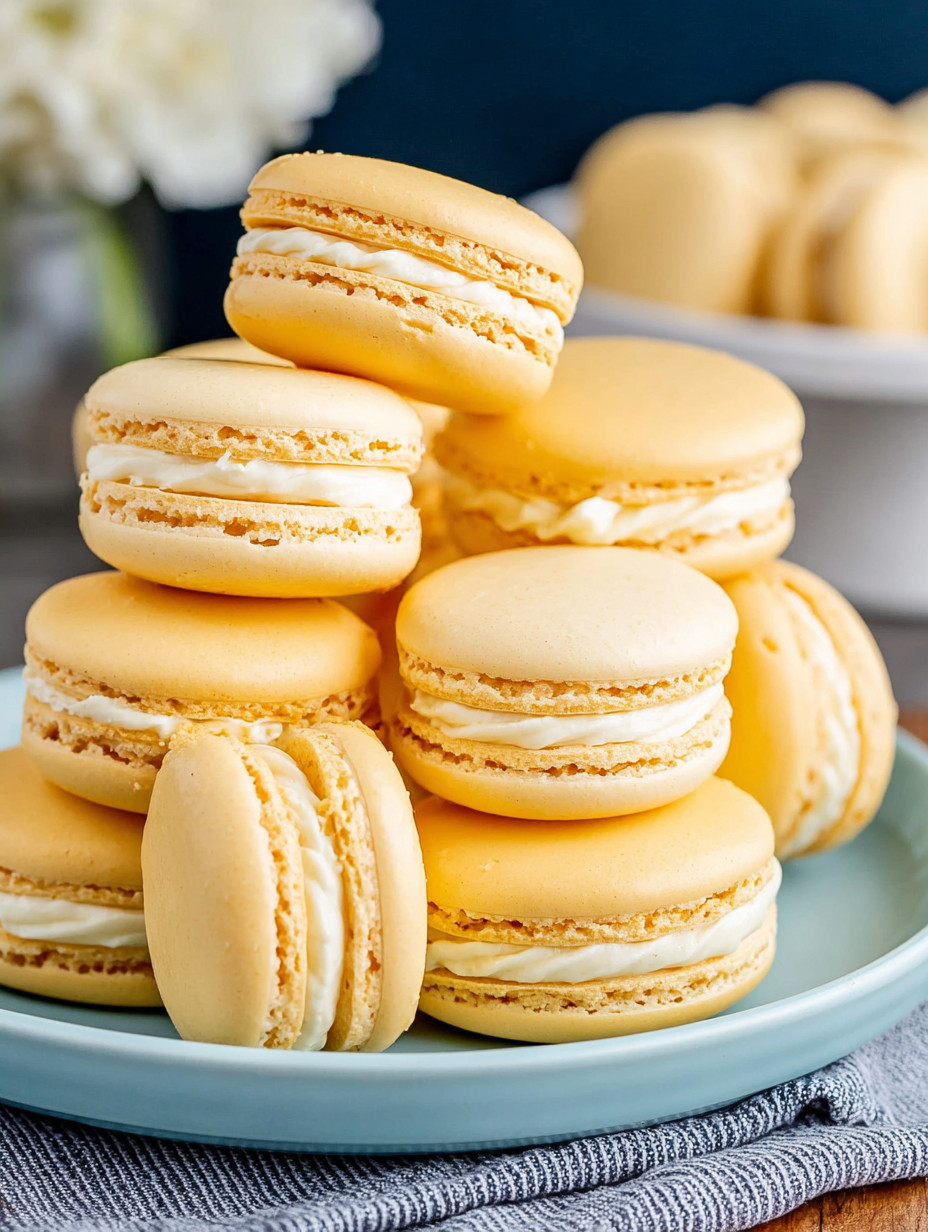
I absolutely love using almond flour as the base of these treats. Its natural sweetness and finely ground texture are the backbone to the macaron’s signature delicate crunch. One of my fondest memories is making trays of these with my kids, experimenting with different colors and fillings, which turned the kitchen into a joyful mess of flour dust and laughter.
Storage Tips
Store your macarons in an airtight container in the refrigerator to keep the shells crisp and the filling fresh. If you want to keep them longer, freeze them in a single layer wrapped well in plastic wrap and placed in a freezer-safe container. Thaw in the fridge overnight before serving to maintain their texture.
Ingredient Substitutions
You can swap almond flour for ground pistachios or hazelnuts for a nutty twist but be aware this might slightly affect the texture and color. For the filling, mascarpone can be a great alternative to cream cheese for a lighter taste. Avoid using liquid food coloring to keep the batter from thinning out.
Serving Suggestions
Serve these macarons on a pretty platter with a dusting of powdered sugar or alongside a cup of tea or coffee for a touch of elegance. They make beautiful gifts when stacked in a box with a ribbon or paired with fresh berries for a lovely dessert plate.
 Pin it
Cultural Context
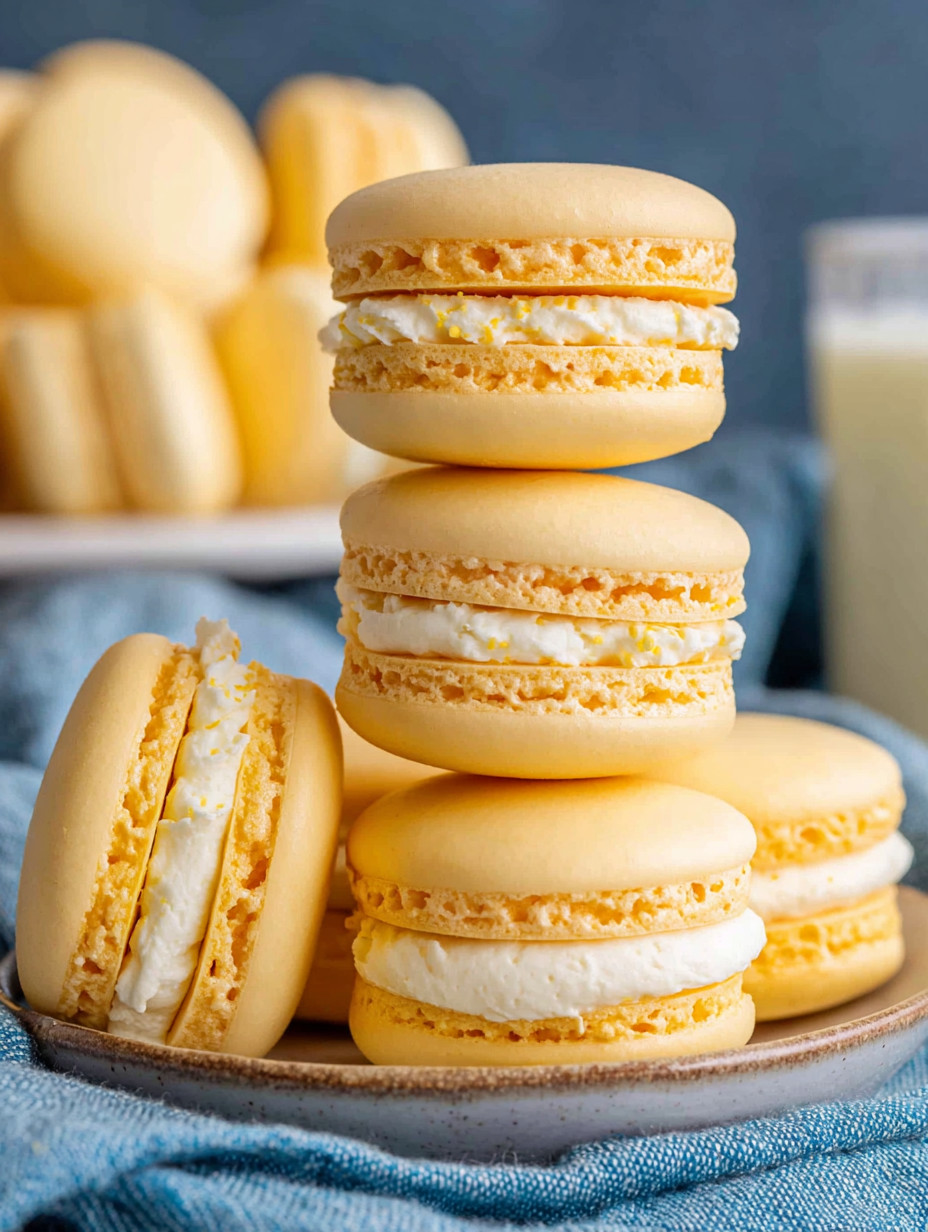
Macarons hail from France but have roots that trace back to Italian monasteries, inspiring the delicate almond cookies we know today. Their resurgence in popularity worldwide is thanks to their versatile flavors and eye-catching appearance, often featured in patisseries and celebrations.
Frequently Asked Questions
- → What makes Swiss meringue different from other types?
Swiss meringue is made by gently warming egg whites and sugar over a bain-marie before whipping, resulting in a silky, stable meringue that holds peaks well and creates smooth, glossy shells.
- → How important is the resting time before baking?
Resting allows a thin skin to form on the shells, which helps prevent cracking and promotes a smooth, shiny surface after baking.
- → Can I use food coloring in the batter?
Yes, gel food coloring can be gently folded into the batter to achieve vibrant colors without affecting the texture.
- → What is the ideal oven temperature for baking macarons?
Baking at around 300°F (150°C) ensures the shells cook evenly, developing a crisp exterior and soft interior without browning excessively.
- → How do I achieve the perfect macaron feet?
Folding the batter to the right consistency and allowing the shells to rest properly before baking encourages the formation of feet—those ruffled edges at the base.
- → What fillings work best with these shells?
Buttercream or cream cheese fillings complement the delicate shells well, adding richness and balance to the sweetness.